


Market volatility spiked again in June thanks mainly to the war in Iran and the inflationary pressure it’s causing. The Federal Reserve’s go-to inflation gauge, the Personal Consumption Expenditures (PCE) index, jumped from 3.8% to 4.1% to start the month1 and oil was up over $84 a barrel.2 Even though oil prices fell sharply following the announcement of a peace deal intended to reopen the Strait of Hormuz, concerns about the strength of that deal kept the markets jumpy. The S&P 500 finished June with a 1% loss while the Nasdaq shed 2.8% for the month.3 Will the jumpiness continue, or was the June swoon just that?
Before we examine that, it’s important to note that the stock market is still at a record high level and sitting on strong gains for the year. The S&P and Nasdaq are up 9.55% and 12.79%, respectively, while the Dow is up by 8.85% year-to-date.3
In addition, several other core economic indicators remain fairly healthy despite rising inflation and geopolitical unrest. Growth estimates for the first quarter were revised upward recently,4 the unemployment rate is stable,5 and long-term interest rates have managed to avoid any kind of major prolonged spike. The interest rate on the 10-year government bond started in June at 4.5% and ended the month at 4.6%.6
In light of all this, the Fed held short-term interest rates steady at its first meeting under new Chairman Kevin Warsh in June and signaled that if any adjustments are made before year’s end, they will more likely be rate hikes rather than cuts. This runs counter to expectations coming into the year and added further to investor unrest since rising interest rates invariably mean shrinking asset values.7
Your Portfolios
So, what does all this mean for your portfolios? Well, for those of you in our stock dividend strategies, you’ll be pleased to know our median stock portfolio is up by 12% or higher for the year. This means our stock approaches are, on average, outperforming the S&P, whose growth is being driven primarily by tech companies, which typically don’t pay dividends. That’s good, and a real testament to the strategic knowledge of our portfolio managers.
For those of you in our more conservative portfolios of bonds and bond-like instruments, your newest statement should look pretty much the same as your previous statement. With interest rates ending the month roughly where they started, bond values held steady in June, keeping our portfolios pretty much on track with our target goals for the year — and also, incidentally, ahead of the leading bond index, the Bloomberg U.S. Agg.8
More importantly, you can rest assured that if conditions should change in the coming months, thanks to the Fed or any other factor, your 4–6% income return will remain unaffected. That’s good news for those of you spending the income, and possibly even better news for those of you reinvesting a portion of it, since it means you may be able to dollar-cost average your way to even more income and growth potential in the future.
Classic Zigzag
The bottom line, as I discussed in last month’s newsletter, is that we’re clearly in a classic zigzag pattern for the markets right now. With geopolitical uncertainty and inflation offset by a still stable economy and strong stock market, it’s not surprising that good months and not-so-good months are alternating back and forth for most investors. One month zigs, the next month zags, and this pattern may continue for some time.
With that in mind, if you should ever find yourself wondering whether your allocation is still the best one for you in this environment, reach out to us at any time and let’s discuss it.
Whether you think this might be a good time to lower your risk a bit or increase it slightly, the most important thing is that you have the strategy you’re comfortable with based on your situation, goals, and risk tolerance. Because all of those things can change, too, just like the markets. So, even if you only have questions rather than specific ideas, please give us a call.
Meanwhile, we hope you had a safe and happy Independence Day and are enjoying the first full month of summer!
Sources:
- bea.gov — PCE Price Index
- iea.org — Oil Market Report, June 2026
- cnn.com — Stock Market, Inflation & War
- bea.gov — Q1 GDP Third Estimate
- tradingeconomics.com — U.S. Unemployment Rate
- marketwatch.com — 10-Year Treasury Yield
- cnbc.com — Fed Rate Decision, June 2026
- bloomberg.com — Bloomberg U.S. Agg Index
July Recipe: Pineapple-Coconut Soft Serve
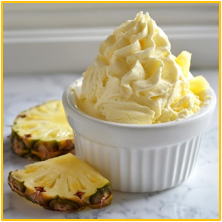
Ingredients:
- 1 ½ pounds fresh pineapple chunks, cut into 1/2-inch pieces (about 6 cups)
- 1 ¼ cups unsweetened coconut cream
- ¼ cup light agave nectar
- Pinch of kosher salt
- Toasted unsweetened flaked coconut, for garnish
Directions:
- Spread pineapple in an even layer on a baking sheet lined with parchment paper. Freeze for at least 8 hours or up to overnight.
- Place frozen pineapple, coconut cream, agave, and salt in a food processor; pulse until finely chopped, about 40 times. Process until smooth and airy, 3 to 4 minutes, stopping to scrape down sides of bowl as needed. Serve soft, or transfer to an airtight container, and freeze until just firm, about 1 hour. Garnish with flaked coconut.
- Make ahead: Soft serve may be stored in an airtight container in the freezer up to 3 months.
The Pineapple-Coconut Soft Serve recipe: Pineapple-Coconut Soft Serve Recipe - Justin Chapple